“For God so loved the world, as to give his only begotten Son; that whosoever believeth in him, may not perish, but may have life everlasting.”
John 3: 16, Douay-rheims
Why the Douay-Rheims is Special
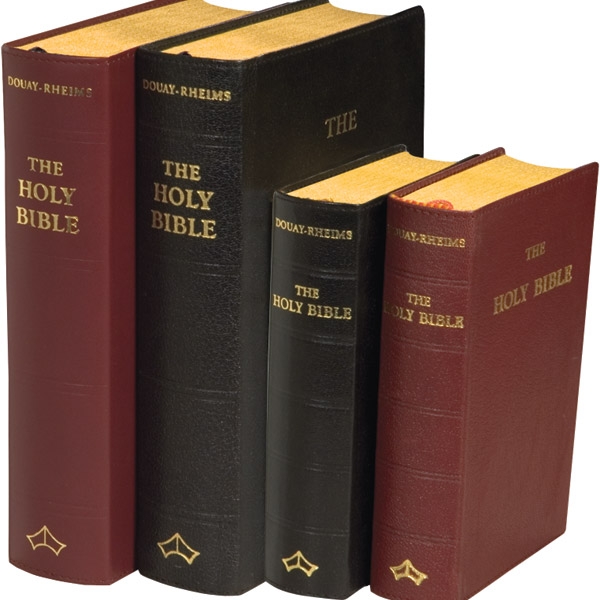
The Douay-Rheims Bible is considered special by many Catholics because it was the first complete English translation of the Bible from the Latin Vulgate, the official Bible of the Catholic Church, into English. This translation was seen as important for English-speaking Catholics who wanted to maintain a connection to the Church’s Latin heritage and have access to a faithful translation of the Bible in their own language. The Douay-Rheims is also known for its strong adherence to the Latin Vulgate, which was seen as preserving the authenticity of the Catholic tradition. Although later translations have replaced it, the Douay-Rheims continue to hold historical and spiritual significance for many Catholics.
The Latin Vulgate was considered special by the Catholic Church in the Middle Ages because it was the first widely accepted Latin translation of the Bible. It was commissioned by Pope Damascus I in the 4th century and completed by St. Jerome. The Latin Vulgate was seen as authoritative because of its connection to the Church and its close adherence to the original Greek and Hebrew texts. The Latin language was also seen as a universal language that could be used to spread the message of the gospel to a wider audience. The Latin Vulgate became the standard Bible for the Western Church and remained so for many centuries. It continues to hold historical and spiritual significance for many Catholics.
Reading level of the Douay-Rheims Version?
The reading level of the Douay-Rheims version of the Bible is considered to be more advanced compared to modern translations, as the language used is more formal and elevated. It uses an older form of English, known as Early Modern English, which was commonly used in the 16th and 17th centuries but may be more challenging for contemporary readers. The Douay-Rheims was intended for a highly literate audience, and its language and syntax reflect this. As a result, it may be more difficult for some readers to understand, particularly those who are not familiar with Early Modern English or the religious language. Nevertheless, its historical and spiritual significance for many Catholics continues to make it a valuable resource for those who study and appreciate it.
Reading a more modern version of the Bible is often recommended for contemporary audiences because it allows for a clearer and more accessible understanding of the text. Modern translations of the Bible use language that is closer to the way people speak today, making it easier for people to comprehend the meaning of the text and apply it to their lives. Additionally, modern translations often incorporate advances in biblical scholarship and archaeology, providing a more accurate understanding of the historical and cultural context in which the texts were written. This can help to deepen the reader’s understanding of the Bible and its teachings. While historical translations, such as the Douay-Rheims, can be valuable for their historical and spiritual significance, reading a more modern version of the Bible can be a more practical choice for those seeking a clear and accessible understanding of its message.
What is the Douay-Rheims Challoner Revision Bible?
The Douay-Rheims Challoner Revision Bible is a revision of the original Douay-Rheims version of the Bible, which was translated by English Catholic scholars and priests in the 16th and 17th centuries. The revision was made by Bishop Richard Challoner, an English Catholic bishop, in the late 17th and early 18th centuries. Bishop Challoner sought to make the Douay-Rheims more accessible to contemporary readers by updating the language and correcting errors in the text. He also added notes and explanations to the text to provide further insight into its meaning and historical context. The Douay-Rheims Challoner Revision became the standard English Catholic Bible and was widely used for several centuries. It continues to be used by some Catholics today, although it has been replaced by later translations for many others.
Who was Bishop Richard Challoner
Bishop Richard Challoner (1691-1781) was an English Catholic bishop and theologian. He was born in London and was ordained a priest in 1715. After serving as a missionary in England for several years, he was appointed as the Vicar Apostolic of the London District, a position he held for the rest of his life. He is best known for his revision of the Douay-Rheims version of the Bible, which was widely used by English-speaking Catholics in the 17th and 18th centuries. His revision, known as the Douay-Rheims Challoner Revision, sought to make the text more accessible to contemporary readers by updating the language and correcting errors, as well as adding notes and explanations to provide further insight into its meaning and historical context. Bishop Challoner was a highly respected figure in the English Catholic community, and his revision of the Douay-Rheims is considered an important contribution to the history of English Catholic biblical translation.
 Catholic Bible Fans